Mesterolone (Proviron 10mg): Medical Education on Androgen Pharmacology
Some medications have very specific medical roles. Mesterolone is one of them. It has been around for decades, and doctors in some countries prescribe it for certain hormone-related conditions. Yet it remains relatively unknown compared to other androgenic drugs.
In fitness and bodybuilding conversations, Proviron appears as a discussion topic. The compound has a reputation for its effects on androgen activity, but the clinical reality differs from the fitness lore.
This article explains Mesterolone from an educational standpoint. You will learn what the drug does, how it works in the body, its approved medical uses, and why it appears in hormone health discussions.
NexorinPharma is a health education and wellness awareness platform. We do not sell prescription medications. Our purpose is clear, responsible education about pharmaceutical compounds.
What Mesterolone (Proviron 10mg) Is
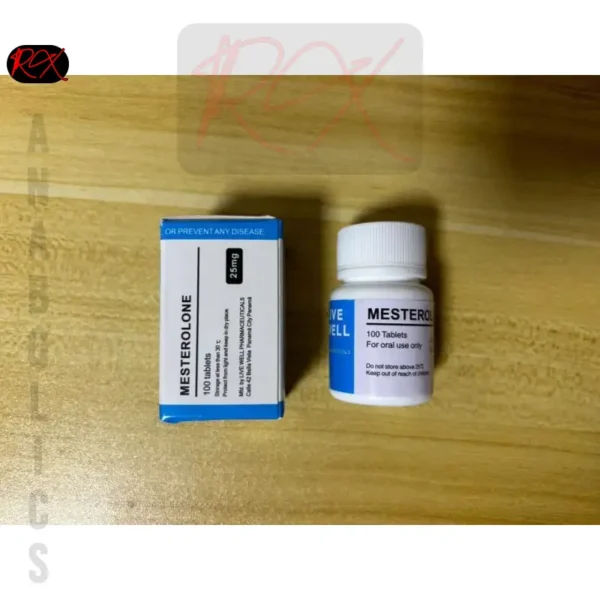
Mesterolone is a synthetic androgenic steroid and a derivative of dihydrotestosterone (DHT). The drug comes as Proviron tablets in 10mg and 25mg strengths, and the generic name is Mesterolone.
The medication was developed by Schering (now Bayer) and received approval in various countries decades ago. Its primary medical use is treating certain forms of male infertility and androgen deficiency.
Mesterolone is not an anabolic steroid in the traditional sense. It has very low anabolic activity, and its effects are primarily androgenic, meaning it affects male characteristics more than muscle growth.
The drug is not 17-alpha alkylated, which is an important distinction. Unlike many oral anabolic steroids, Mesterolone does not carry the same level of liver toxicity and is metabolized differently.
Proviron tablets are taken by mouth and absorbed through the digestive system. The drug is not considered liver toxic at therapeutic doses.
How Mesterolone Works in the Body
Mesterolone binds to androgen receptors, but its mechanism differs from testosterone. Its primary pharmacological action involves high affinity binding to sex hormone binding globulin (SHBG).
Here is the simplified explanation. SHBG is a protein in your blood that binds to sex hormones including testosterone. When testosterone is bound to SHBG, it is inactive and cannot enter cells or exert effects.
Mesterolone binds to SHBG with very high affinity. By occupying SHBG binding sites, it displaces testosterone, causing free testosterone levels to rise. Free testosterone is the active form that exerts effects in tissues.
The drug also has direct androgenic activity through binding to androgen receptors in various tissues. However, its androgenic potency is lower than testosterone.
Mesterolone does not aromatize. No conversion to estrogen occurs. It is not significantly anabolic and does not promote muscle growth in clinical studies.
Because the drug lacks 17-alpha alkylation, it does not cause significant liver stress at therapeutic doses, setting it apart from most other oral androgenic compounds.
Medical Uses of Mesterolone in Clinical Settings
Mesterolone has specific approved medical uses. All require a prescription and physician supervision. The drug is not commonly prescribed in many countries today.
Male infertility is a primary use. Mesterolone has been used to improve sperm quality in men with certain types of infertility, with some studies showing improvements in sperm count and motility. The evidence, however, is mixed.
Androgen deficiency. In some countries, Mesterolone is prescribed for low testosterone symptoms. It is not the standard treatment, as testosterone replacement therapy is more commonly used today.
Depression. Some older studies investigated Mesterolone for depression in men. Results were inconsistent, and this is not a standard use.
All of these are prescription applications. A doctor must determine whether Mesterolone is appropriate for your specific situation.
Mesterolone is not approved for bodybuilding or athletic performance. It has no significant anabolic effects, and clinical studies do not support its use for muscle growth.
Why Proviron Is Discussed in Hormone Health and Bodybuilding Conversations
Proviron appears in fitness discussions for reasons rooted in its pharmacology.
The SHBG binding effect is the primary driver of interest. Higher SHBG levels bind more testosterone, which lowers the amount of free, active testosterone in the body. By binding to SHBG, Proviron increases free testosterone, theoretically making more active testosterone available in tissues.
In bodybuilding conversations, this effect is discussed as a way to enhance the activity of other androgens. The drug is rarely discussed as a standalone compound and instead appears alongside testosterone or other steroids in these conversations.
Mesterolone also has anti-estrogenic properties. It does not lower estrogen directly, but it may reduce estrogen receptor activity in some tissues. This effect is not well studied in clinical literature.
These effects are pharmacological observations, not clinical evidence. Studies do not support using Proviron for bodybuilding, and the evidence in fitness communities is theoretical and anecdotal.
Understanding Proviron 10mg Terminology
Proviron 10mg refers to the strength of the oral tablet. The 10mg dose is a standard reference point, and the 25mg tablet also exists.
Mesterolone 10mg and Proviron are the same medication. Proviron is the brand name while Mesterolone is the generic name. Both contain the same active ingredient.
Proviron tablets are taken by mouth and absorbed through the digestive system. The half life is approximately 12 hours, making twice-daily dosing standard in medical settings.
Because the drug is not 17-alpha alkylated, it does not cause significant liver stress at therapeutic doses. This sets it apart from many other oral androgenic compounds.
No established medical guidelines exist for non-medical use. The drug is not approved for bodybuilding or athletic performance.
Potential Effects on Androgen Balance
This section provides educational information about how Mesterolone affects the body at a physiological level. No outcomes are guaranteed. Individual responses vary significantly.
Increased free testosterone is the primary effect. By binding to SHBG and displacing testosterone, the drug raises free testosterone levels. This is measurable in clinical studies.
Direct androgenic effects. Mesterolone binds to androgen receptors and can produce androgenic effects in target tissues, though these are generally mild at therapeutic doses.
No estrogenic effects. The drug does not aromatize, so no water retention or gynecomastia risk from estrogen applies.
No significant anabolic effects. Mesterolone does not promote muscle growth in clinical studies, which is an important distinction from anabolic steroids.
Effects on mood. Some users report an improved sense of wellbeing, possibly related to androgen activity in the brain. Clinical evidence for this effect is limited.
Side Effects and Health Considerations
Mesterolone carries side effects. Most are related to its androgenic activity.
Androgenic side effects include acne, oily skin, increased body hair, and male pattern baldness in genetically susceptible men. These effects are dose dependent.
Hormonal suppression. Exogenous androgens can suppress natural testosterone production, and Mesterolone may cause some degree of suppression. The extent of this suppression is debated in the literature.
Liver effects. Unlike 17-alpha alkylated steroids, Mesterolone is not considered liver toxic at therapeutic doses. However, any oral medication can affect liver function in susceptible individuals.
Mood changes. Some users report increased aggression or irritability, while others report no change.
Cardiovascular effects. Mesterolone may affect cholesterol levels, though the evidence is limited. Monitoring is prudent regardless.
These risks exist even in medical settings with active monitoring. Self-administration removes this oversight entirely.
Importance of Medical Supervision and Hormone Monitoring
Mesterolone requires medical supervision for legitimate use. Hormone balance is complex, and intervening without proper evaluation is dangerous.
A doctor performs several steps before prescribing. They order blood work including total testosterone, free testosterone, SHBG, and other hormone markers. They evaluate symptoms and determine whether treatment is actually needed.
Medical supervision includes baseline testing and follow-up monitoring. Blood work tracks hormone levels and potential side effects, and dose adjustments are made based on individual response.
Self-medication without medical oversight is dangerous. Hormone levels change unpredictably, side effects go unmonitored, and underlying conditions go undiagnosed.
If you have questions about Mesterolone or hormone health, speak with a physician. Do not self-prescribe.
Drug Interactions and Precautions
Mesterolone interacts with certain medications in clinically meaningful ways.
Oral anticoagulants. Mesterolone may increase the effects of blood thinners like warfarin, raising bleeding risk. Monitoring is recommended if both are used.
Insulin and oral diabetes medications. Androgens can affect blood sugar levels, and dose adjustments may be needed for diabetic patients.
Liver enzyme inducers. Medications that affect liver metabolism may alter Mesterolone blood levels in either direction.
Always provide your doctor with a complete medication list, including over-the-counter drugs and supplements.
Myths vs Facts About Proviron in Fitness Discussions
Several myths surround Proviron in fitness communities. Here are the facts.
Myth: Proviron is a powerful anabolic steroid. Fact: Mesterolone has very low anabolic activity. It does not build muscle. Its effects are primarily androgenic.
Myth: Proviron does not suppress natural testosterone. Fact: Exogenous androgens can suppress natural testosterone production. Mesterolone may cause some suppression.
Myth: Proviron has no side effects. Fact: Androgenic side effects including acne, hair loss, and mood changes occur. Hormonal suppression is also possible.
Myth: You need Proviron to feel the effects of testosterone. Fact: Most men on testosterone therapy do not need additional androgens. Standard testosterone replacement is effective on its own.
Myth: Proviron is liver safe so it is completely safe. Fact: No medication is completely safe. Androgenic side effects and hormonal suppression are real risks regardless of liver safety.
Lifestyle Factors That Support Healthy Hormone Balance
Hormone health involves more than medication. Lifestyle factors support natural hormone balance in meaningful ways.
Body fat management is important. Excess body fat increases aromatase activity, which converts testosterone to estrogen. Maintaining healthy body fat levels supports hormone balance without medication.
Sleep quality matters significantly. Testosterone production peaks during deep sleep, and seven to nine hours per night supports natural hormone levels.
Stress management helps. Chronic cortisol elevation suppresses testosterone, while stress reduction techniques help restore hormonal balance over time.
Strength training supports natural testosterone production. Heavy compound movements are particularly effective at stimulating hormonal responses.
Nutrition plays a foundational role. Adequate protein, fat, and micronutrients support hormone production. Zinc and vitamin D are particularly important for testosterone health.
Frequently Asked Questions
1. Is Mesterolone the Same as Proviron?
Yes. Proviron is the brand name for Mesterolone. Generic Mesterolone tablets contain the same active ingredient.
2. What Is Proviron 10mg Used for Medically?
Proviron is used for certain types of male infertility and androgen deficiency in some countries. It is not commonly prescribed today.
3. Can a Doctor Prescribe Mesterolone for Low Testosterone?
In some countries, yes. However, testosterone replacement therapy is the standard treatment. Mesterolone is not considered first-line therapy.
4. How Long Does Mesterolone Stay in Your System?
The half life is approximately 12 hours. The drug clears within a few days after discontinuation.
5. Does Proviron Affect Fertility?
Mesterolone has been used to treat certain types of infertility. Effects vary, and androgens can suppress sperm production in some men. A doctor should monitor fertility markers throughout any use.
6. Is Proviron Liver Toxic?
Mesterolone is not 17-alpha alkylated and is not considered liver toxic at therapeutic doses. However, any oral medication should be used under medical supervision.
7. Where Can I Find Reliable Mesterolone Information?
Peer-reviewed medical journals are the most reliable source. Resources include PubMed and the National Institutes of Health. NexorinPharma provides educational summaries, but always verify with primary sources.
Conclusion
Mesterolone is a prescription androgenic medication and a derivative of DHT. The drug works primarily by binding to SHBG and increasing free testosterone. It has very low anabolic activity.
Medical uses include certain forms of male infertility and androgen deficiency. Prescriptions are less common today because newer treatments are often preferred.
Mesterolone carries side effects. Androgenic effects like acne and hair loss occur. Hormonal suppression is possible. Medical supervision and blood work are essential for any legitimate use.
Fitness discussions about Proviron focus on its SHBG binding properties. Clinical studies do not support its use for bodybuilding, and the evidence in fitness communities is theoretical and anecdotal.
This article provides educational information only. NexorinPharma is a health education platform. We do not sell or source Mesterolone or any prescription medication.
If you have questions about Mesterolone or hormone health, speak with a physician. Lifestyle factors like body fat management, sleep, stress reduction, and resistance training all support natural hormone balance. Prioritize evidence-based approaches. Your long-term health depends on informed decisions and professional medical guidance.
Be the first to review “Mesterolone 10mg (Proviron)”
Related products
Tablets
Tablets
Tablets
Tablets
Tablets
Tablets
Tablets
Reviews
There are no reviews yet.