YK-11 XT Labs | NexorinPharma
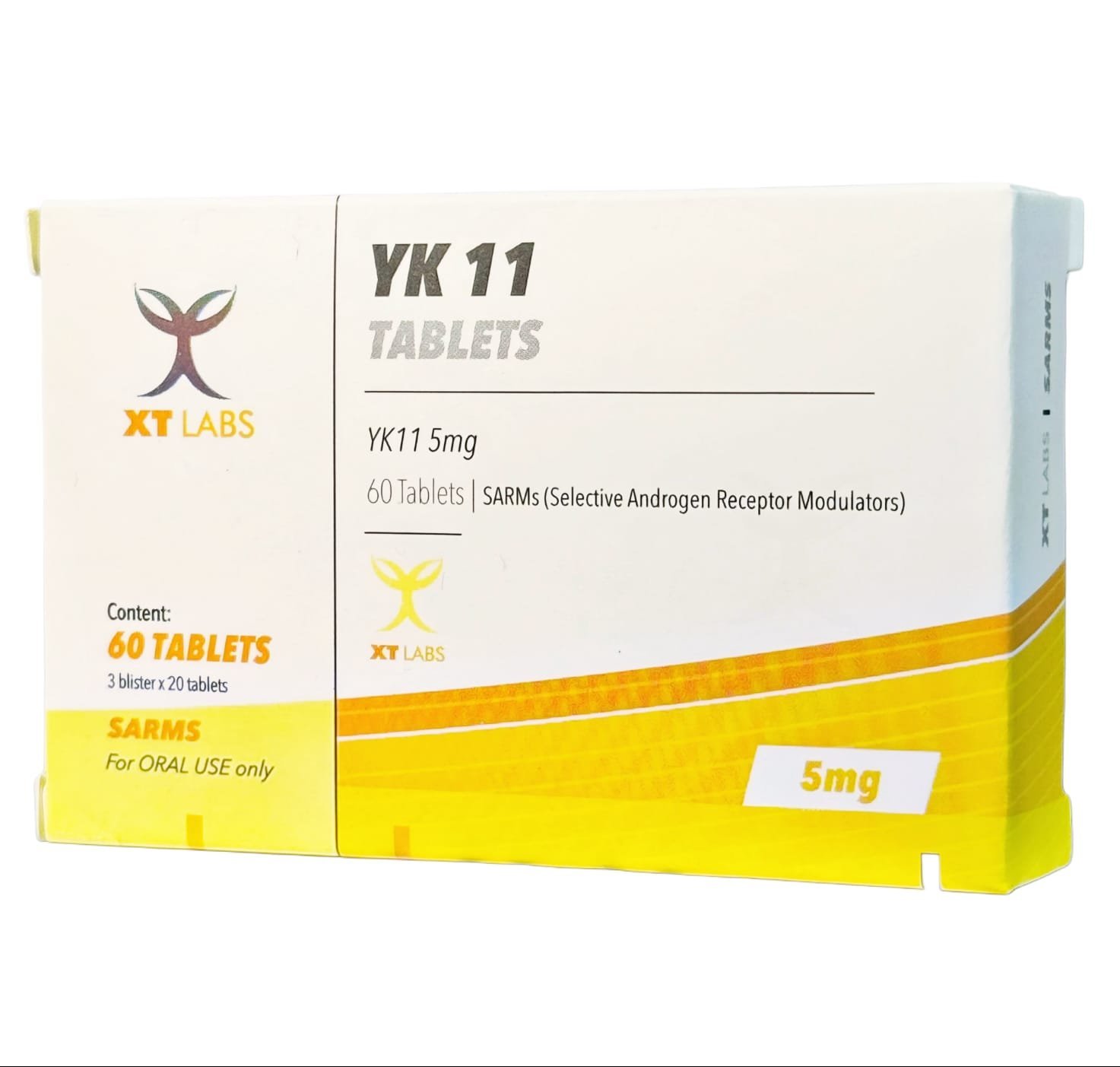
YK-11 by XT Labs is an oral research compound classified as a selective androgen receptor modulator. At NexorinPharma, we carry YK-11 by XT Labs as part of our SARM and research compound inventory for customers in markets where YK-11 is legally available.
YK-11 is one of the most discussed compounds in SARM and research chemical communities. It occupies a unique pharmacological position compared to most selective androgen receptor modulators. Unlike conventional SARMs that work exclusively through androgen receptor agonism, YK-11 combines partial androgen receptor agonism with myostatin inhibition through follistatin upregulation. This dual mechanism sets it apart from virtually every other compound discussed in performance and research communities.
This page covers what YK-11 is, how it works, and what health and legal considerations apply. It does not constitute medical advice, recommend use outside of legitimate research contexts, or provide dosage guidance of any kind.
Product Specifications
Website: nexorinpharma.com Product Name: YK-11 Manufacturer: XT Labs Also Known As: YK11, Myostine Drug Class: Selective androgen receptor modulator, myostatin inhibitor, steroidal SARM Structure: Steroidal. Structurally derived from 5-alpha-dihydrotestosterone. Presentation: Oral tablet or capsule Route of Administration: Oral Half-Life: Approximately 6 to 10 hours Anabolic Activity: Strong Androgenic Activity: Partial androgen receptor agonism Aromatization: Not established in available research Development Status: Research compound. No clinical trials. Not FDA approved. Legal Status: Not FDA approved. Legal status varies significantly by country.
About XT Labs
XT Labs is a Mexican manufacturer with a strong presence in Latin American performance markets and broader international recognition in bodybuilding and research compound communities. The brand produces anabolic steroid, SARM, and ancillary products for markets where such compounds are legally available.
Like all manufacturers operating outside regulated pharmaceutical channels, XT Labs does not carry the manufacturing oversight, regulatory scrutiny, or clinical trial documentation of pharmaceutical grade prescription products. Consequently, quality, purity, and concentration accuracy are less verifiable than with regulated products. Within the non-prescription market, however, XT Labs carries consistent brand recognition across Latin American and international performance communities.
What Is YK-11
YK-11 is a synthetic steroidal compound. Japanese researcher Yuichiro Kanno first synthesized and described it in 2011 through research into steroidal compounds with selective androgen receptor modulator properties. The YK-11 designation derives from its research identification code in Kanno’s original work.
Structurally, YK-11 derives from 5-alpha-dihydrotestosterone, making it a steroidal SARM. This structural origin distinguishes it from non-steroidal SARMs like Ostarine, Ligandrol, and RAD-140, which share no structural relationship with steroid hormones. The steroidal structure has direct implications for its pharmacological profile and side effect considerations.
YK-11 holds no approved medication status anywhere in the world and has not undergone clinical trials in human subjects. Its pharmacological characterization comes entirely from in vitro cell culture studies and limited animal research. As a result, its profile in living human subjects remains unestablished through controlled clinical research.
How YK-11 Works
YK-11 works through two proposed primary mechanisms. It acts as a partial agonist at androgen receptors and inhibits myostatin through follistatin upregulation. Both mechanisms derive from in vitro research rather than controlled human clinical trials.
Partial Androgen Receptor Agonism
YK-11 binds to androgen receptors and acts as a partial agonist. Unlike full androgen receptor agonists like testosterone, partial agonism means YK-11 activates the receptor to a degree below the maximum produced by full agonists. This selective partial agonism theoretically produces tissue-selective anabolic effects while generating less androgenic activity in tissues like the prostate and skin compared to full agonists.
In vitro research demonstrates that YK-11 induces the production of anabolic factors in muscle cells through androgen receptor activation. This cell culture evidence supports its classification as a SARM with anabolic activity. However, these in vitro findings have not yet been validated in controlled human research.
Myostatin Inhibition Through Follistatin
The second and most pharmacologically distinctive proposed mechanism of YK-11 is myostatin inhibition through follistatin upregulation. Myostatin is a protein produced in muscle tissue that limits muscle growth, acting as a natural negative regulator of skeletal muscle mass.
In vitro research demonstrates that YK-11 increases follistatin production in muscle cells. Follistatin binds to and inhibits myostatin activity. As a result, increased follistatin from YK 11 exposure theoretically reduces myostatin’s inhibitory effect on muscle growth. This proposed mechanism is the primary characteristic distinguishing YK-11 from conventional SARMs and drives its consistent discussion in research communities.
Importantly, this mechanism has only been demonstrated in cell culture studies. Whether it operates with meaningful physiological significance in living human subjects following oral administration remains unestablished through controlled human research.
Proposed Combined Effect
The combination of partial androgen receptor agonism and myostatin inhibition through two distinct pathways theoretically produces anabolic effects through complementary mechanisms simultaneously. This dual mechanism hypothesis drives YK-11’s discussion as a potentially more potent research compound than conventional single-mechanism SARMs. Furthermore, it has generated significant interest in research communities studying both androgen receptor signaling and myostatin pathway modulation.
Research Background
YK-11’s research background is significantly more limited than most compounds discussed at NexorinPharma. Understanding the scope and limitations of this research base is therefore essential for anyone researching this compound.
Original In Vitro Research
Yuichiro Kanno’s original 2011 research described YK-11’s synthesis and initial characterization in cell culture models. This research identified its androgen receptor binding properties and initial anabolic activity in muscle cell cultures. Subsequent in vitro research further expanded the characterization of its follistatin upregulation and myostatin inhibition properties.
Animal Research Limitations
Limited animal research data exists for YK-11. The available animal data provides some preliminary pharmacokinetic information and initial safety observations. However, the animal research base is significantly more limited than for most compounds with established clinical use histories, which represents an important context for anyone evaluating this compound.
Absence of Human Clinical Trials
YK-11 has not undergone controlled clinical trials in human subjects. No Phase 1, Phase 2, or Phase 3 human clinical trial data exists for this compound. This absence represents a fundamental distinction from compounds with established clinical trial histories. Consequently, the complete pharmacological profile, safety parameters, and long-term effects of YK-11 in living human subjects remain unestablished through controlled research.
Implications of Limited Research Base
Most knowledge about YK-11’s effects in humans derives from anecdotal self-reporting in research and performance communities rather than controlled scientific investigation. Anecdotal reports carry inherent limitations in reliability and generalizability and are not a substitute for controlled clinical research.
Why YK-11 Is Referenced in Research and Performance Communities
YK-11 generates consistent discussion in SARM and research compound communities. Several specific characteristics drive that discussion.
Myostatin Inhibition Hypothesis
The myostatin inhibition hypothesis is the primary driver of YK-11’s discussion in research and performance communities. Myostatin’s role as a natural limiter of muscle mass development makes compounds that theoretically reduce myostatin activity a consistent topic of interest. As a result, YK-11’s proposed follistatin upregulation mechanism places it in a unique position among research compounds as a potential myostatin pathway modulator.
Dual Mechanism Profile
The combination of androgen receptor agonism and myostatin inhibition through two distinct pathways distinguishes YK-11 from conventional single-mechanism SARMs. This dual mechanism hypothesis consequently drives research community discussion about its potential as a tool for studying both androgen receptor signaling and myostatin pathway modulation simultaneously.
Steroidal SARM Classification
YK-11’s steroidal structure derived from DHT distinguishes it from non-steroidal SARMs. This structural distinction drives research community interest in how its steroidal origin influences receptor binding profile and tissue selectivity compared to non-steroidal SARM compounds. Furthermore, this classification raises side effect considerations that non-steroidal SARMs do not carry to the same degree.
YK-11 Versus Other SARMs and Research Compounds
Versus Ostarine (MK-2866)
Ostarine is a non-steroidal SARM with the most extensive research documentation of any compound in the SARM category, including completed Phase 2 human clinical trials. Unlike YK-11, it works exclusively through selective androgen receptor agonism without a myostatin inhibition component. Ostarine consequently carries a substantially more established research base. However, YK-11’s proposed dual mechanism distinguishes it pharmacologically from Ostarine’s single-mechanism profile.
Versus Ligandrol (LGD-4033)
Ligandrol is a non-steroidal SARM with Phase 1 human clinical trial data. It works through androgen receptor agonism with higher binding affinity than Ostarine and, like Ostarine, operates exclusively through androgen receptor agonism without a myostatin inhibition component. Ligandrol consequently carries more clinical research documentation than YK-11, though it lacks the proposed myostatin inhibition mechanism.
Versus RAD-140 (Testolone)
RAD-140 is a non-steroidal SARM with limited Phase 1 human clinical trial data and high androgen receptor binding affinity. Like other conventional SARMs, it works through androgen receptor agonism without a myostatin inhibition component. RAD-140’s higher androgenic potency among conventional SARMs distinguishes it from YK-11’s partial agonism profile. In addition, RAD-140’s non-steroidal structure distinguishes it from YK-11’s DHT-derived steroidal framework.
Versus Anabolic-Androgenic Steroids
Conventional anabolic-androgenic steroids work through full androgen receptor agonism with significantly higher androgenic activity than SARMs are proposed to produce. YK-11’s partial androgen receptor agonism and proposed tissue selectivity distinguish it from conventional anabolic steroids. However, its steroidal structure means it shares structural characteristics with conventional steroids that non-steroidal SARMs do not carry.
Side Effects and Health Risk Considerations
YK-11 carries a health risk profile that is significantly less characterized than most compounds discussed at NexorinPharma due to the complete absence of controlled human clinical trial safety data.
Liver Toxicity Considerations
YK-11’s steroidal structure and oral administration route raise liver toxicity considerations. Some researchers propose that its structural characteristics may produce hepatotoxic effects similar to those associated with oral 17-alpha alkylated anabolic steroids. Whether 17-alpha alkylation is present in YK-11’s structure is not definitively established in available research. Liver enzyme monitoring is therefore a relevant health consideration for anyone using this compound.
Hormonal Suppression
Anecdotal reports from research communities consistently reference hormonal suppression with YK-11 use. As a compound with androgen receptor agonist activity, some degree of HPG axis suppression and natural testosterone production reduction is pharmacologically expected. The degree and reversibility of this suppression in human subjects, however, remains unestablished through controlled clinical research. Hormonal monitoring is consequently a relevant health consideration for anyone using this compound.
Cardiovascular Considerations
YK-11’s cardiovascular side effect profile remains unestablished through controlled clinical research. Adverse lipid profile changes are a common concern across androgen receptor-active compounds. Whether YK-11 produces clinically significant lipid changes in human subjects has not been characterized in available controlled research. Regular lipid monitoring is therefore a prudent health consideration for anyone using this compound.
Androgenic Effects
Despite its partial androgen receptor agonism, YK-11 may still produce androgenic side effects in susceptible individuals. These potentially include accelerated hair loss in genetically predisposed individuals and acne. In women, furthermore, virilization risks are relevant considerations with any androgen receptor-active compound.
Unknown Long-Term Safety Profile
The most significant health consideration with YK-11 is the complete absence of controlled long-term human safety data. Unlike approved medications or compounds with established clinical trial data, YK-11’s long-term effects in human subjects remain entirely unknown from a controlled research standpoint. This fundamental uncertainty is therefore the primary health consideration for anyone researching this compound.
Legal and Regulatory Status
YK-11 holds no FDA approval for any indication and carries no approved medical applications in the United States or most other regulatory jurisdictions.
In the United States, YK-11 is not a scheduled controlled substance under the Controlled Substances Act as of available data. However, the FDA has issued warning letters to companies marketing SARMs including YK-11 for human consumption, citing unapproved new drug concerns. This regulatory posture is directly relevant to anyone researching YK-11 in a US context.
In the United Kingdom, SARMs including YK-11 are not licensed medicines. Purchasing them for research purposes is legal, but selling them for human consumption is illegal under the Medicines Act.
The World Anti-Doping Agency bans YK-11 and all SARMs in competitive sports under the anabolic agents category. As a result, it is prohibited across all Olympic sports, professional athletics, and competitive organizations that follow WADA guidelines.
You are responsible for confirming the legal status of YK-11 in your specific jurisdiction before purchasing from NexorinPharma.
Frequently Asked Questions
Is YK-11 by XT Labs Available at NexorinPharma
Yes. NexorinPharma carries YK-11 by XT Labs for customers in markets where this research compound is legally available. Visit nexorinpharma.com to check current availability and pricing.
What Is the Half-Life of YK-11
YK-11 produces a half-life of approximately 6 to 10 hours based on available pharmacokinetic data. This estimate derives from limited data rather than comprehensive clinical pharmacokinetic studies, so it should be understood within that context.
Has YK-11 Been Tested in Human Clinical Trials
No. YK-11 has not undergone controlled clinical trials in human subjects. Its pharmacological characterization derives from in vitro cell culture studies and limited animal research. This absence of human clinical trial data is therefore a fundamental consideration for anyone researching this compound.
What Makes YK-11 Different From Other SARMs
YK-11’s primary distinguishing characteristics are its steroidal structure derived from DHT and its proposed myostatin inhibition through follistatin upregulation. Most other SARMs are non-steroidal compounds working exclusively through androgen receptor agonism. This proposed dual mechanism consequently distinguishes it pharmacologically from conventional single-mechanism SARMs.
Does YK-11 Cause Hormonal Suppression
Anecdotal reports from research communities consistently reference hormonal suppression with YK-11 use. As a compound with androgen receptor agonist activity, HPG axis suppression is pharmacologically expected to some degree. The degree and reversibility of suppression, however, remains unestablished through controlled human research. Hormonal monitoring is consequently a relevant health consideration.
What Are the Most Significant Health Considerations
The absence of controlled human clinical trial safety data is the most fundamental health consideration with YK-11. Potential liver toxicity from its steroidal oral structure, hormonal suppression, cardiovascular lipid effects, and androgenic side effects in susceptible individuals complete the primary health consideration profile. Medical supervision is therefore important for anyone using this compound.
Is YK-11 Legal to Purchase
YK-11 holds no FDA approval and its legal status varies significantly by jurisdiction. The FDA has issued warnings regarding SARMs marketed for human consumption, and WADA bans it in competitive sports. You are responsible for confirming the legal status in your jurisdiction before purchasing from NexorinPharma.
What to Consider Before Purchasing YK-11 by XT Labs
YK-11 occupies a unique position among research compounds discussed in performance and SARM communities. Its proposed dual mechanism of partial androgen receptor agonism and myostatin inhibition through follistatin upregulation generates consistent research community interest. However, its research base is limited to in vitro cell culture studies and limited animal research without any controlled human clinical trial data.
This limited research base means the pharmacological profile, safety parameters, and long-term effects of YK-11 in living human subjects remain unestablished through controlled scientific investigation. As a result, it carries a greater degree of pharmacological uncertainty than compounds with established clinical trial histories.
The XT Labs non-prescription format does not carry the quality verification of pharmaceutical grade research compounds. Manufacturing standards consequently differ between pharmaceutical grade research materials and non-prescription market preparations. Independent third-party testing is therefore the appropriate approach for verifying compound identity and concentration accuracy.
YK-11 carries unknown long-term health risks, potential liver toxicity, hormonal suppression, cardiovascular, and androgenic considerations. Medical supervision is essential for anyone using research compounds with limited characterized safety profiles. Consult a licensed medical professional before use.
For customers in markets where YK-11 is legally available, visit nexorinpharma.com to check current YK-11 by XT Labs availability, pricing, and stock levels.
Be the first to review “YK 11 XT Labs USA”
Related products
our products
our products
our products
our products
our products
our products
our products
Reviews
There are no reviews yet.