
Clenbutrex Ultra 60mcg XT Labs (Clenbuterol Hydrochloride) | NexorinPharma
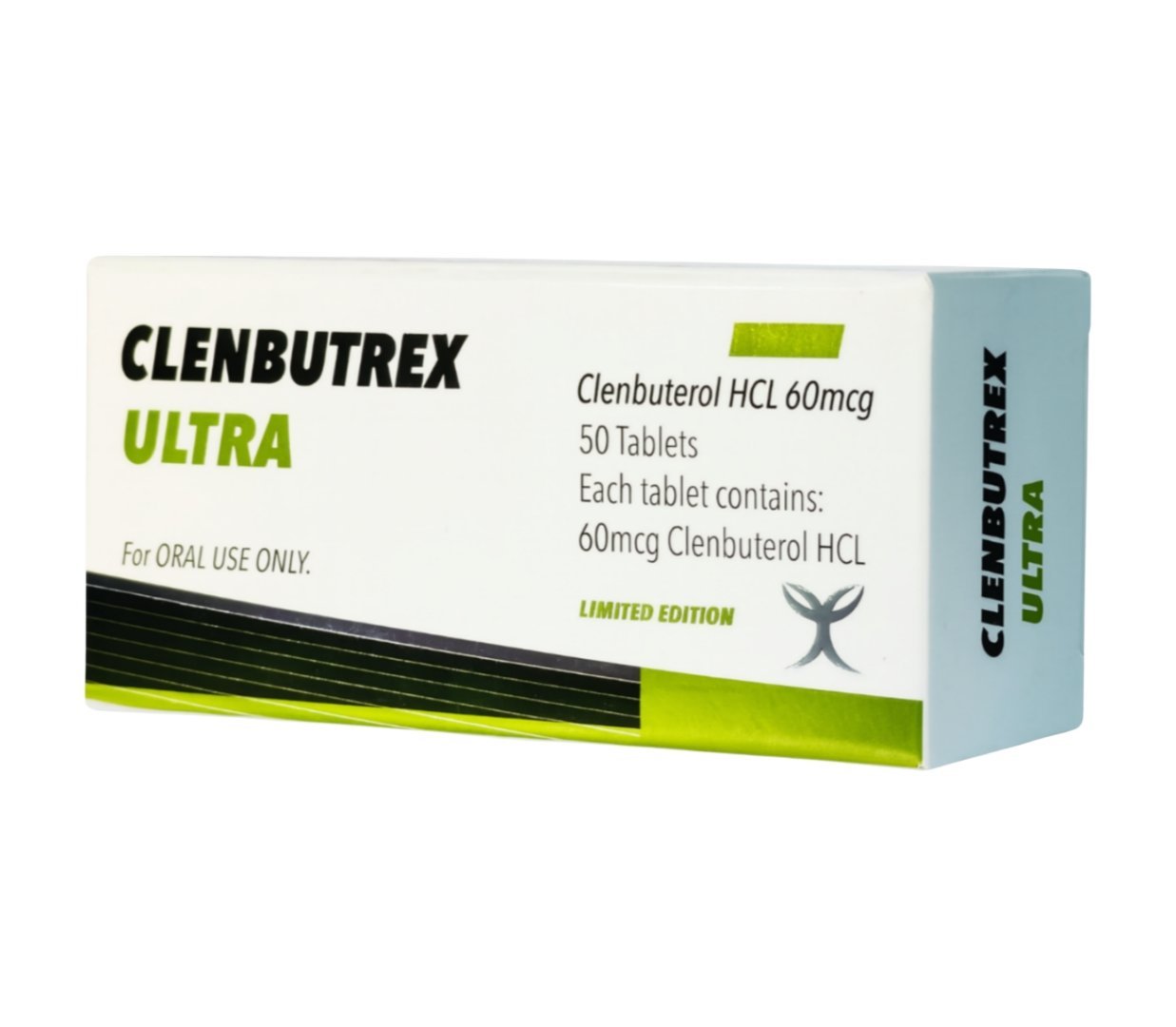
Clenbutrex Ultra 60mcg by XT Labs is an oral beta-2 adrenergic agonist containing 60mcg of Clenbuterol Hydrochloride per tablet. At NexorinPharma, we carry Clenbutrex Ultra 60mcg as part of our ancillary and research compound inventory for customers in markets where Clenbuterol is legally available.
Clenbuterol Hydrochloride is the active compound in Clenbutrex Ultra. It is a sympathomimetic amine originally developed as a bronchodilator for respiratory conditions including asthma. Clenbuterol is not approved for human use in the United States. However, it carries approved veterinary and limited human pharmaceutical applications in several other countries. It generates consistent discussion in bodybuilding and performance communities due to its documented thermogenic and lipolytic properties.
The 60mcg concentration of Clenbutrex Ultra represents a higher per-tablet dose than the standard 20mcg and 40mcg tablet formats commonly referenced in clinical and performance community discussions. This distinction is important context for anyone researching this specific product.
Like all compounds affecting cardiovascular and metabolic function, Clenbutrex Ultra 60mcg carries significant health and legal considerations. This page covers what Clenbuterol is, how it works, and what health and legal considerations apply. It does not constitute medical advice. It does not recommend or encourage use outside of legitimate medical supervision. It does not provide dosage guidance of any kind.
Product Specifications
Website: nexorinpharma.com Product Name: Clenbutrex Ultra 60mcg Manufacturer: XT Labs Active Compound: Clenbuterol Hydrochloride Also Known As: Clenbuterol, Clen, Spiropent, Ventipulmin Drug Class: Beta-2 adrenergic agonist, sympathomimetic amine, bronchodilator Concentration: 60mcg per tablet Presentation: Oral tablet Form: Tablet Half-Life: Approximately 35 to 40 hours Route of Administration: Oral Mechanism of Action: Selective beta-2 adrenergic receptor agonism producing bronchodilation, thermogenesis, and lipolysis FDA Approval: Not approved for human use in the United States Veterinary Use: Approved for use in horses under the brand name Ventipulmin in the United States Legal Status: Not FDA approved for human use. Legal status varies significantly by country.
About XT Labs
XT Labs is a Mexican manufacturer with a strong presence in Latin American performance markets and broader international recognition in bodybuilding and performance communities. The brand produces a range of anabolic steroid, research compound, and ancillary products for markets where such compounds are legally available.
Like all manufacturers operating outside regulated pharmaceutical channels, XT Labs does not carry the manufacturing oversight, regulatory scrutiny, or clinical trial documentation of pharmaceutical grade prescription products. Consequently, quality, purity, and concentration accuracy are less verifiable than with regulated products. Within the non-prescription market, however, XT Labs carries consistent brand recognition particularly across Latin American and international performance communities.
What Is Clenbuterol
Clenbuterol is a synthetic sympathomimetic amine belonging to the beta-2 adrenergic agonist drug class. Pharmaceutical researchers originally developed it as a bronchodilator for the management of obstructive airway conditions including asthma and chronic obstructive pulmonary disease. Its bronchodilatory mechanism operates through selective activation of beta-2 adrenergic receptors in bronchial smooth muscle tissue, producing airway relaxation and improved airflow.
Beyond its bronchodilatory applications, Clenbuterol produces significant thermogenic and lipolytic effects through beta-2 adrenergic receptor activation in metabolic tissues. These metabolic effects are distinct from its primary bronchodilatory mechanism and are directly relevant to its discussion in bodybuilding and performance communities.
Clenbuterol Hydrochloride is the salt form used in pharmaceutical and non-prescription preparations. The hydrochloride salt improves stability and oral bioavailability compared to the free base form.
How Clenbuterol Works
Clenbuterol works through selective agonism of beta-2 adrenergic receptors throughout the body. Beta-2 adrenergic receptors are present in bronchial smooth muscle, adipose tissue, skeletal muscle, cardiac muscle, and numerous other tissues. Activation of these receptors produces distinct effects depending on the tissue type involved.
Beta-2 Adrenergic Receptor Agonism
Clenbuterol binds selectively to beta-2 adrenergic receptors, activating intracellular signaling cascades through cyclic adenosine monophosphate elevation. The downstream effects of this signaling vary by tissue type but broadly produce smooth muscle relaxation, increased metabolic rate, and enhanced lipolysis in relevant tissues. As a result, beta-2 adrenergic receptor agonism is the single mechanism through which all of Clenbuterol’s pharmacological effects are produced.
Bronchodilation
In bronchial smooth muscle tissue, beta-2 adrenergic receptor activation produces smooth muscle relaxation and airway dilation. This bronchodilatory effect reduces airway resistance and improves airflow in obstructive airway conditions. Consequently, this is the primary clinical mechanism underlying Clenbuterol’s approved veterinary and limited human pharmaceutical applications.
Thermogenesis
Clenbuterol activates beta-2 adrenergic receptors in metabolic tissues, increasing cellular metabolic rate through elevated cyclic AMP signaling. This produces thermogenesis, an increase in heat production and overall energy expenditure. As a result, resting metabolic rate increases with Clenbuterol use. This thermogenic effect is one of the most consistently referenced pharmacological characteristics of Clenbuterol in performance community discussions.
Lipolysis
Clenbuterol activates beta-2 adrenergic receptors in adipose tissue, stimulating hormone-sensitive lipase and increasing the breakdown of stored triglycerides into free fatty acids. These free fatty acids enter circulation for use as energy. Consequently, this lipolytic mechanism is the primary driver of Clenbuterol’s discussion in performance communities in the context of fat metabolism and body composition management.
Skeletal Muscle Effects
Clenbuterol activates beta-2 adrenergic receptors in skeletal muscle tissue. Research has documented protein synthesis stimulation and potential anti-catabolic effects through this mechanism in animal models. However, the translation of animal model findings to clinically significant anabolic effects in humans remains a subject of ongoing research debate rather than established clinical evidence.
Receptor Downregulation
Beta-2 adrenergic receptors downregulate with sustained Clenbuterol exposure. This receptor downregulation reduces the magnitude of thermogenic and lipolytic effects over time with continuous use. This pharmacological phenomenon is directly relevant to anyone researching Clenbuterol’s sustained metabolic effects.
About the 60mcg Concentration
The 60mcg per tablet concentration of Clenbutrex Ultra represents a higher per-tablet dose than the standard 20mcg and 40mcg tablet formats commonly referenced in clinical and performance community discussions. Understanding this distinction is important context for anyone researching this specific product.
Comparison With Standard Concentration Formats
Standard Clenbuterol tablet formats in non-prescription markets are commonly produced at 20mcg and 40mcg per tablet. The 60mcg concentration of Clenbutrex Ultra consequently represents a 50 percent higher concentration than the standard 40mcg format and three times the standard 20mcg format. This higher concentration per tablet carries additional cardiovascular and side effect considerations compared to lower-concentration formats.
Higher Concentration Cardiovascular Considerations
Clenbuterol’s cardiovascular side effect profile including increased heart rate, palpitations, and arrhythmia risk is dose-dependent. The higher 60mcg concentration per tablet consequently carries more pronounced cardiovascular side effect considerations than standard 20mcg and 40mcg formats. This distinction is directly relevant to anyone evaluating Clenbutrex Ultra compared to lower-concentration Clenbuterol preparations.
Non-Prescription Market Context
Clenbutrex Ultra 60mcg is produced for markets where Clenbuterol is legally available. It does not carry the manufacturing oversight, regulatory scrutiny, or clinical documentation of pharmaceutical grade prescription products. Quality, purity, and concentration accuracy are consequently less verifiable than with regulated products.
Clenbutrex Ultra 60mcg Versus Other Metabolic Compounds
Versus Standard 20mcg and 40mcg Clenbuterol Formats
Standard Clenbuterol preparations at 20mcg and 40mcg per tablet are the most commonly referenced formats in clinical and performance community discussions. Clenbutrex Ultra 60mcg contains a higher concentration per tablet than both standard formats. As a result, the cardiovascular and other dose-dependent side effect considerations are more pronounced with the 60mcg format compared to standard lower-concentration tablets.
Versus Ephedrine
Ephedrine is a sympathomimetic amine with broader adrenergic receptor activity than Clenbuterol. Unlike Clenbuterol’s selective beta-2 targeting, Ephedrine activates both alpha and beta adrenergic receptors. Clenbuterol’s longer half-life of approximately 35 to 40 hours compared to Ephedrine’s shorter duration produces more sustained beta-2 receptor activation per dose. Furthermore, Clenbuterol’s greater beta-2 selectivity produces a more targeted thermogenic and lipolytic profile compared to Ephedrine’s broader adrenergic activity.
Versus T3 Thyroid Hormone
T3 thyroid hormone preparations increase metabolic rate through thyroid hormone receptor activation rather than beta-2 adrenergic receptor agonism. T3 produces thermogenic effects through a fundamentally different hormonal mechanism than Clenbuterol. In addition, T3 directly affects thyroid hormone axis function and carries distinct health considerations related to thyroid suppression that Clenbuterol does not produce.
Versus Somatropin
Human Growth Hormone produces lipolytic effects through growth hormone receptor activation and downstream IGF-1 stimulation. Clenbuterol, on the other hand, produces lipolysis through direct beta-2 adrenergic receptor activation in adipose tissue. These are pharmacologically distinct lipolytic mechanisms operating through entirely different receptor pathways.
Versus GLP-1 Receptor Agonists
GLP-1 receptor agonists like Semaglutide produce weight reduction primarily through appetite suppression and gastric emptying delay rather than direct thermogenesis and lipolysis. Clenbuterol produces its metabolic effects through direct beta-2 adrenergic receptor activation in metabolic and adipose tissues. These are fundamentally different metabolic mechanisms producing weight reduction through distinct pharmacological pathways.
Clinical and Veterinary Background
Clenbuterol carries a documented clinical and veterinary history that provides relevant context for its pharmacological profile.
Veterinary Approval in the United States
The FDA approved Clenbuterol under the brand name Ventipulmin for use in horses with airway obstruction. This veterinary approval is the only FDA-sanctioned application of Clenbuterol in the US market. Ventipulmin is a prescription veterinary product intended exclusively for equine use.
Human Pharmaceutical Use Outside the United States
Clenbuterol carries approved human pharmaceutical status in several countries outside the United States. In some European and Latin American markets, it has been approved and prescribed as a bronchodilator for asthma and obstructive airway management under various brand names including Spiropent. These international approvals provide a relevant clinical reference framework for understanding its bronchodilatory pharmacology in human subjects.
Research Into Muscle Wasting Conditions
Clenbuterol’s potential anabolic and anti-catabolic effects in skeletal muscle have generated research interest in its application for muscle wasting conditions. Animal model research has documented meaningful effects on muscle protein synthesis and anti-catabolism. However, controlled human clinical trial evidence for these applications remains limited compared to its more extensively documented bronchodilatory mechanism.
Side Effects and Health Risks
Clenbutrex Ultra 60mcg carries a significant side effect profile driven by its beta-2 adrenergic receptor agonism. The higher 60mcg concentration per tablet makes these side effect considerations more pronounced than with standard lower-concentration formats.
Cardiovascular Effects
Cardiovascular side effects are the most serious health considerations associated with Clenbuterol use. Beta-2 adrenergic receptor activation produces increased heart rate, palpitations, and cardiac arrhythmias. At higher concentrations, Clenbuterol produces clinically significant cardiac stress. Long-term supraphysiological Clenbuterol exposure has been associated with cardiac hypertrophy and myocardial damage in animal studies. The 60mcg concentration of Clenbutrex Ultra makes cardiovascular monitoring particularly important compared to standard lower-concentration formats.
Tremors and Nervousness
Tremors, particularly fine hand tremors, are among the most commonly reported side effects of Clenbuterol use. These effects result from beta-2 adrenergic receptor activation in skeletal muscle tissue. Nervousness, anxiety, and agitation are also commonly reported and relate to the sympathomimetic mechanism. These effects are dose-dependent and consequently more pronounced at the 60mcg concentration than at standard lower-dose formats.
Electrolyte Disturbances
Clenbuterol use is associated with electrolyte disturbances including hypokalemia, a reduction in serum potassium levels. Beta-2 adrenergic receptor activation drives potassium into cells, reducing circulating potassium levels. Hypokalemia carries cardiac arrhythmia risk and represents a clinically significant electrolyte consideration with Clenbuterol use. Consequently, electrolyte monitoring is a relevant health consideration for anyone using this compound.
Insomnia and Sleep Disruption
Clenbuterol’s sympathomimetic mechanism and long half-life of approximately 35 to 40 hours produce significant sleep disruption in many users. Insomnia and reduced sleep quality are commonly reported, particularly with later-day administration. The extended half-life means that even morning administration can affect sleep quality given the duration of sympathomimetic activity.
Headaches
Headaches are commonly reported with Clenbuterol use and are associated with its vasodilatory and sympathomimetic effects. These effects are generally dose-dependent and most pronounced during initial use periods. At the higher 60mcg concentration, headache frequency and severity may be more pronounced than at standard lower-dose formats.
Sweating
Increased sweating from thermogenic metabolic rate elevation is among the most commonly reported effects with Clenbuterol use. Excessive sweating contributes to fluid and electrolyte considerations relevant to overall health management during Clenbuterol use.
Receptor Downregulation and Tachyphylaxis
Beta-2 adrenergic receptor downregulation with sustained Clenbuterol exposure reduces the magnitude of thermogenic and lipolytic effects over time. This tachyphylaxis phenomenon is directly relevant to anyone researching Clenbuterol’s sustained metabolic effects and represents a pharmacological limitation of continuous use regardless of concentration.
Legal and Regulatory Status
Clenbuterol is not approved for human use in the United States. The FDA has not approved Clenbuterol for any human pharmaceutical indication. Its only FDA-sanctioned application is veterinary use in horses under the brand name Ventipulmin.
Clenbuterol is not classified as a Schedule III controlled substance under the Controlled Substances Act in the same category as anabolic steroids. However, its non-approved status for human use carries significant regulatory considerations in the US market.
In several European and Latin American countries, Clenbuterol carries approved human pharmaceutical status as a bronchodilator. Legal status consequently varies significantly across international jurisdictions.
The World Anti-Doping Agency bans Clenbuterol in competitive sports under the beta-2 agonist category. It appears on prohibited substance lists across Olympic sports, professional athletics, and competitive bodybuilding organizations that conduct testing. WADA has established a threshold for urinary Clenbuterol concentrations to account for potential contaminated meat consumption in countries where Clenbuterol use in livestock is a documented concern.
You are responsible for confirming the legal status of Clenbuterol in your specific jurisdiction before purchasing from NexorinPharma.
Frequently Asked Questions
Is Clenbutrex Ultra 60mcg by XT Labs Available at NexorinPharma
Yes. NexorinPharma carries Clenbutrex Ultra 60mcg by XT Labs for customers in markets where Clenbuterol is legally available. Visit nexorinpharma.com to check current availability and pricing.
What Is the Half-Life of Clenbuterol
Clenbuterol produces a half-life of approximately 35 to 40 hours. This extended half-life produces sustained beta-2 adrenergic receptor activation and prolonged thermogenic and lipolytic effects following each dose. It also contributes to the sleep disruption commonly reported with Clenbuterol use due to sustained sympathomimetic activity.
How Does the 60mcg Concentration Compare to Standard Clenbuterol Formats
Standard Clenbuterol tablet formats are commonly produced at 20mcg and 40mcg per tablet. The 60mcg concentration of Clenbutrex Ultra is consequently 50 percent higher than the standard 40mcg format. This higher concentration per tablet carries more pronounced dose-dependent side effect considerations, particularly regarding cardiovascular effects and tremors.
Is Clenbuterol an Anabolic Steroid
No. Clenbuterol is a beta-2 adrenergic agonist and sympathomimetic amine. It does not work through androgen receptors and does not suppress the HPG axis or natural testosterone production. Its mechanism of action is entirely distinct from anabolic-androgenic steroids.
Does Clenbuterol Cause Heart Problems
Clenbuterol carries documented cardiovascular side effects including increased heart rate, palpitations, and arrhythmias through beta-2 adrenergic receptor activation in cardiac tissue. Long-term supraphysiological exposure has been associated with cardiac hypertrophy in animal studies. Cardiovascular monitoring is therefore a primary health consideration for anyone using Clenbuterol. Anyone with pre-existing cardiovascular conditions should consult a physician before using any beta-2 adrenergic agonist.
What Are the Most Serious Health Risks
Cardiovascular effects including increased heart rate, arrhythmias, and potential cardiac hypertrophy are the most serious health concerns. In addition, electrolyte disturbances including hypokalemia, sleep disruption, and tremors complete the primary side effect profile. The higher 60mcg concentration makes these considerations more pronounced than with standard lower-dose formats. Medical supervision is therefore essential for anyone using this compound.
Is Clenbutrex Ultra 60mcg Legal to Purchase
Clenbuterol is not approved for human use in the United States. Legal status varies significantly by jurisdiction. It carries banned status under WADA for competitive sports. You are responsible for confirming the legal status in your jurisdiction before purchasing from NexorinPharma.
What to Consider Before Purchasing Clenbutrex Ultra 60mcg
Clenbuterol has a documented pharmacological profile based on its clinical use as a bronchodilator in several international markets and research into its thermogenic and lipolytic mechanisms. This pharmacological background provides a meaningful reference framework for understanding its effects and risks. However, controlled human clinical trial data specifically examining its metabolic applications in performance contexts is more limited than its bronchodilatory clinical research base.
The 60mcg concentration of Clenbutrex Ultra exceeds standard tablet formats commonly referenced in clinical and performance community discussions. As a result, the dose-dependent side effect considerations, particularly regarding cardiovascular effects, are more pronounced with this specific product than with standard lower-concentration formats. The clinical research base for Clenbuterol at lower doses provides a relevant pharmacological framework but does not fully represent the risk profile at the higher 60mcg concentration.
The XT Labs non-prescription format does not carry the manufacturing oversight of pharmaceutical grade products. Quality, purity, and concentration accuracy are consequently less verifiable than with regulated pharmaceutical preparations. The cardiovascular side effect profile of Clenbuterol makes concentration accuracy particularly relevant, as inaccuracies carry direct cardiovascular health implications.
Clenbuterol carries documented cardiovascular, electrolyte, sleep, and neurological health risks. These risks require medical supervision to manage responsibly. Consulting a licensed medical professional is therefore the appropriate starting point for anyone with health concerns related to beta-2 adrenergic agonist use.
For customers in markets where Clenbuterol is legally available, visit nexorinpharma.com to check current Clenbutrex Ultra 60mcg availability, pricing, and stock levels
Be the first to review “clenbutrex ultra Xt labs USA”
Related products

our products
our products
our products
our products

our products
our products

our products
our products
Reviews
There are no reviews yet.