
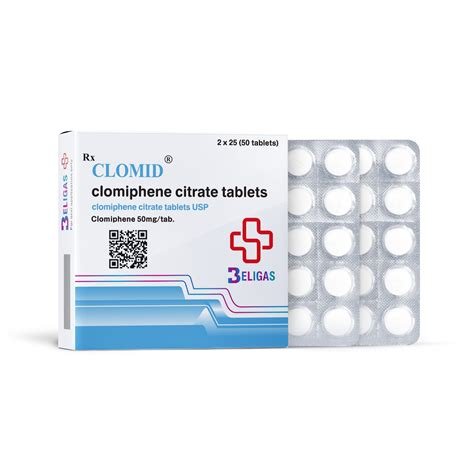

Clomid 50mg 50 Tablets Beligas Pharma (Clomiphene Citrate) | NexorinPharma
Clomid 50mg by Beligas Pharma International is an oral selective estrogen receptor modulator containing 50mg of Clomiphene Citrate per tablet. Each pack contains 50 tablets. At NexorinPharma, we carry Clomid 50mg by Beligas Pharma as part of our ancillary and support compound inventory for customers in markets where Clomiphene Citrate is legally available.
Clomiphene Citrate is the active compound in this preparation. Unlike most compounds discussed in performance communities, it carries active FDA approval for specific clinical indications and has an extensively documented clinical research base spanning several decades.
Clomiphene Citrate generates consistent discussion in bodybuilding and performance communities in the context of hormonal recovery support following anabolic steroid use. Its mechanism of action through selective estrogen receptor modulation in the hypothalamus and pituitary gland stimulates endogenous gonadotropin production and natural testosterone restoration. This mechanism consequently drives its consistent discussion as a hormonal support compound across performance communities worldwide.
Like all medications affecting hormonal function, Clomid 50mg carries significant health and legal considerations. This page covers what Clomiphene Citrate is, how it works, and what health and legal considerations apply. It does not constitute medical advice, recommend use outside of legitimate medical supervision, or provide dosage guidance of any kind.
Product Specifications
Website: nexorinpharma.com Product Name: Clomid 50mg Manufacturer: Beligas Pharma International Active Compound: Clomiphene Citrate Also Known As: Clomid, Clomiphene, Serophene, Clomifene Drug Class: Selective estrogen receptor modulator, non-steroidal SERM, ovulation stimulant Concentration: 50mg per tablet Pack Size: 50 tablets Presentation: Oral tablet Form: Tablet Half-Life: Approximately 5 to 7 days Route of Administration: Oral Mechanism of Action: Selective estrogen receptor antagonism in the hypothalamus and pituitary, stimulating gonadotropin release FDA Approval: Yes. Approved for ovulatory dysfunction in women. Legal Status: Prescription only in the United States and most developed countries. Legal status varies by country.
About Beligas Pharma International
Beligas Pharma International is a non-prescription pharmaceutical manufacturer producing a range of oral and injectable products for markets where such compounds are legally available. The brand carries a presence in international performance and men’s health communities and produces its product range with pharmaceutical-style presentation and clear compound labeling.
Like all manufacturers operating outside regulated pharmaceutical channels, Beligas Pharma International does not carry the manufacturing oversight, regulatory scrutiny, or clinical trial documentation of pharmaceutical grade prescription products. Consequently, quality, purity, and concentration accuracy are less verifiable than with regulated products. Within the non-prescription market, however, Beligas Pharma International is consistently referenced for product consistency and presentation clarity.
What Is Clomiphene Citrate
Clomiphene Citrate is a non-steroidal selective estrogen receptor modulator. The term selective estrogen receptor modulator describes a class of compounds that interact with estrogen receptors in a tissue-selective manner, acting as estrogen receptor agonists in some tissues and estrogen receptor antagonists in others. This tissue selectivity produces distinct effects in different hormone-sensitive tissues throughout the body.
Clomiphene Citrate exists as a mixture of two geometric isomers: enclomiphene and zuclomiphene. Enclomiphene is the more pharmacologically active isomer responsible for the primary estrogen receptor antagonist effects at the hypothalamic and pituitary level. Zuclomiphene, on the other hand, is the less active isomer with weaker and more prolonged estrogen receptor activity. Together, these two isomers contribute to Clomiphene Citrate’s overall pharmacological profile and extended effective duration relative to its measured half-life.How Clomiphene Citrate Works
Clomiphene Citrate works primarily through estrogen receptor antagonism in the hypothalamus and anterior pituitary gland. This central mechanism drives the gonadotropin-stimulating effects that underlie both its clinical applications and its discussion in performance communities.
Hypothalamic Estrogen Receptor Antagonism
Estrogen normally exerts negative feedback on the hypothalamus, suppressing gonadotropin-releasing hormone pulse frequency and amplitude. Clomiphene Citrate blocks estrogen receptors in the hypothalamus, preventing this negative feedback from occurring. As a result, the hypothalamus increases gonadotropin-releasing hormone pulse frequency and amplitude. This increased GnRH signaling then drives downstream increases in gonadotropin production from the anterior pituitary gland.
Pituitary Gonadotropin Stimulation
Increased gonadotropin-releasing hormone signaling from the hypothalamus stimulates the anterior pituitary gland to produce and release luteinizing hormone and follicle-stimulating hormone. In women, this LH and FSH surge drives follicular development and ovulation. In men, on the other hand, increased LH stimulates Leydig cell testosterone production in the testes while increased FSH supports spermatogenesis. As a result, Clomiphene Citrate stimulates endogenous testosterone production in men through this central gonadotropin-stimulating mechanism.
Tissue-Selective Estrogen Receptor Activity
Clomiphene Citrate acts as an estrogen receptor antagonist in the hypothalamus and pituitary, producing the gonadotropin-stimulating effects described above. In other tissues, however, it may act as a partial estrogen receptor agonist. This tissue selectivity produces a distinct pharmacological profile compared to non-selective estrogen receptor blockers and is directly relevant to understanding both its clinical applications and its side effect profile.
Testosterone Restoration Mechanism
In men with suppressed HPG axis function following anabolic steroid use, Clomiphene Citrate’s hypothalamic and pituitary estrogen receptor antagonism stimulates the restart of endogenous gonadotropin production. Increased LH production then stimulates Leydig cell testosterone production, supporting natural testosterone restoration. This mechanism is consequently the primary driver of Clomiphene Citrate’s discussion in performance communities as a hormonal recovery support compound.
Clinical Background
Clomiphene Citrate carries a well-documented clinical history across multiple applications. This clinical background distinguishes it from most compounds discussed in performance communities.
FDA Approval for Ovulatory Dysfunction
The FDA approved Clomiphene Citrate for the treatment of ovulatory dysfunction in women desiring pregnancy. This is the primary and most historically established clinical indication for Clomiphene Citrate. Clinical trials document consistent improvement in ovulation rates and pregnancy outcomes in women with ovulatory dysfunction treated with this compound. Furthermore, this clinical approval gives it one of the most established regulatory histories of any compound discussed in performance communities.
Male Hypogonadism
Clomiphene Citrate has been studied and used clinically for the treatment of male hypogonadism as an off-label application in several markets. Clinical research documents meaningful increases in endogenous testosterone production in hypogonadal men through its gonadotropin-stimulating mechanism. This application is directly relevant to its discussion in performance communities for hormonal recovery support.
Male Infertility
In addition, Clomiphene Citrate has documented clinical use in the treatment of male infertility associated with low gonadotropin levels. By stimulating LH and FSH production, it supports both testosterone production and spermatogenesis in men with specific fertility-related diagnoses. This clinical application reflects its broader role in male reproductive health beyond testosterone restoration alone.
Enclomiphene Development
The more active enclomiphene isomer of Clomiphene Citrate has been under separate clinical development as a standalone compound for male hypogonadism treatment. This separate development program reflects the ongoing clinical research interest in Clomiphene Citrate’s gonadotropin-stimulating mechanism for male hormonal health applications and provides additional clinical research context for understanding its pharmacological profile.
Why Clomiphene Citrate Is Referenced in Performance Communities
Clomiphene Citrate generates consistent discussion in bodybuilding and performance communities. Several specific characteristics drive that discussion.
Hormonal Recovery Support
The most consistently referenced application of Clomiphene Citrate in performance communities is hormonal recovery support following anabolic steroid use. Anabolic steroid use suppresses the HPG axis and natural testosterone production. Following cessation of anabolic steroid use, restoring natural testosterone production requires reactivating suppressed HPG axis function. Clomiphene Citrate’s gonadotropin-stimulating mechanism addresses this reactivation directly, making it a consistently discussed hormonal recovery support compound across performance communities.
Endogenous Testosterone Stimulation
Unlike exogenous testosterone preparations that replace rather than stimulate natural testosterone production, Clomiphene Citrate stimulates the body’s own testosterone production through the gonadotropin pathway. This distinction consequently drives its discussion as a hormonal support rather than replacement compound and is directly relevant to its application in HPG axis recovery contexts.
SERM Classification
Clomiphene Citrate’s SERM classification distinguishes it pharmacologically from aromatase inhibitors like Anastrozole and Exemestane, which reduce estrogen production. Rather than reducing estrogen production, Clomiphene Citrate blocks estrogen receptors in specific tissues while potentially acting as an estrogen agonist in others. This pharmacological distinction is therefore relevant to understanding its application alongside or as an alternative to aromatase inhibitors in performance community discussions.
FDA-Approved Compound Status
Clomiphene Citrate’s active FDA approval for ovulatory dysfunction provides a stronger regulatory and clinical research foundation than most compounds discussed in performance communities. This clinical pedigree consequently contributes to its consistent discussion as one of the better-characterized ancillary compounds available in non-prescription performance markets.
Clomid 50mg Versus Other Hormonal Support Compounds
Versus Tamoxifen (Nolvadex)
Tamoxifen is another selective estrogen receptor modulator with a well-documented clinical history. Both Clomiphene Citrate and Tamoxifen act as estrogen receptor antagonists in the hypothalamus and pituitary, stimulating gonadotropin production through the same central mechanism. However, their tissue-selective receptor activity profiles differ significantly in other tissues. Tamoxifen carries stronger estrogen receptor antagonist activity in breast tissue, which is relevant to its primary clinical application in breast cancer management. Clomiphene Citrate’s gonadotropin-stimulating potency through hypothalamic and pituitary estrogen receptor antagonism is, furthermore, generally considered more pronounced than Tamoxifen’s in performance community discussions about hormonal recovery support.
Versus Anastrozole (Arimidex)
Anastrozole is a non-steroidal aromatase inhibitor that reduces estrogen production through aromatase enzyme inhibition. Unlike Clomiphene Citrate, it does not block estrogen receptors or directly stimulate gonadotropin production. Rather, it reduces the estrogenic negative feedback on the HPG axis indirectly by lowering circulating estrogen levels. Clomiphene Citrate, on the other hand, directly blocks estrogen receptors in the hypothalamus and pituitary regardless of circulating estrogen levels. These are consequently pharmacologically distinct approaches to managing estrogenic feedback on the HPG axis.
Versus Exemestane (Aromasin)
Exemestane is a steroidal aromatase inhibitor producing irreversible aromatase enzyme inactivation. Like Anastrozole, it reduces estrogen production rather than blocking estrogen receptors. Consequently, it carries a fundamentally different mechanism of action from Clomiphene Citrate’s SERM-based receptor antagonism approach. Both compounds influence HPG axis function through distinct pharmacological pathways, making them relevant but pharmacologically separate considerations in performance community discussions.
Versus Human Chorionic Gonadotropin
Human chorionic gonadotropin acts directly on Leydig cells in the testes to stimulate testosterone production, bypassing the hypothalamic and pituitary steps of the HPG axis entirely. Clomiphene Citrate, by contrast, stimulates testosterone production indirectly through hypothalamic and pituitary gonadotropin stimulation. These represent fundamentally different approaches to testosterone stimulation. HCG acts downstream of the HPG axis while Clomiphene Citrate acts upstream through central receptor antagonism, making them pharmacologically complementary rather than interchangeable.
Side Effects and Health Risks
Clomid 50mg carries a well-documented side effect profile based on extensive clinical trial data across its approved and off-label indications.
Visual Disturbances
Visual disturbances are among the most clinically significant side effects associated with Clomiphene Citrate use. These include blurred vision, visual spots or flashes, and in rare cases more serious visual effects. Visual disturbances are associated with Clomiphene Citrate’s estrogen receptor activity in ocular tissues. Anyone experiencing visual changes during Clomiphene Citrate use should therefore discontinue immediately and seek medical attention. This side effect is directly relevant to anyone using Clomiphene Citrate regardless of the specific application.
Mood Changes and Emotional Effects
Clomiphene Citrate’s estrogen receptor modulation across multiple tissues produces mood changes in some users. These include emotional lability, irritability, and in some cases depression. The mood effects of Clomiphene Citrate are documented in clinical research across its approved indications and are consequently relevant to anyone using the compound for any application.
Estrogenic and Anti-Estrogenic Effects
Clomiphene Citrate’s tissue-selective estrogen receptor activity produces a complex hormonal environment. In some tissues, partial estrogen receptor agonism may produce estrogenic effects. In others, receptor antagonism produces anti-estrogenic effects. This complex tissue-selective profile consequently produces a side effect picture that differs from pure estrogen receptor blockers or pure estrogen agonists and requires careful consideration.
Hot Flashes
Hot flashes are among the most commonly reported side effects in clinical trials across Clomiphene Citrate’s indications. These vasomotor symptoms result from its anti-estrogenic effects in relevant tissues and are documented across both male and female users in clinical research. In most cases, they are manageable and resolve with discontinuation.
Headaches
Headaches are commonly reported with Clomiphene Citrate use and are associated with its hormonal mechanism of action. These effects are generally mild to moderate in severity and resolve with discontinuation in most cases.
Hormonal Considerations
In men, Clomiphene Citrate stimulates LH and FSH production and consequently increases endogenous testosterone production. Elevated testosterone levels and the complex hormonal environment produced by Clomiphene Citrate’s tissue-selective receptor activity require monitoring through regular blood work. Hormonal monitoring including testosterone, LH, FSH, and estradiol levels is therefore a relevant health consideration for anyone using this compound.
Legal and Regulatory Status
Clomiphene Citrate carries active FDA approval for the treatment of ovulatory dysfunction in women. Outside of this approved indication, however, it is a prescription-only medication in the United States. Obtaining Clomiphene Citrate without a valid prescription is consequently a legal offense in many jurisdictions.
In the United Kingdom, Clomiphene Citrate is a prescription-only medication under the Medicines Act. It does not carry controlled substance scheduling in most jurisdictions in the same category as anabolic steroids. However, it remains prescription-only in most developed countries regardless.
The World Anti-Doping Agency bans Clomiphene Citrate in competitive sports for male athletes under the hormone and metabolic modulators category. As a result, it appears on prohibited substance lists across Olympic sports, professional athletics, and competitive bodybuilding organizations that conduct testing. Female athletes may use Clomiphene Citrate under documented therapeutic use exemptions for its approved clinical indication.
You are responsible for confirming the legal status of Clomiphene Citrate in your specific jurisdiction before purchasing from NexorinPharma.
Frequently Asked Questions
Is Clomid 50mg by Beligas Pharma Available at NexorinPharma
Yes. NexorinPharma carries Clomid 50mg by Beligas Pharma for customers in markets where Clomiphene Citrate is legally available. Visit nexorinpharma.com to check current availability and pricing.
What Is the Half-Life of Clomiphene Citrate
Clomiphene Citrate produces a half-life of approximately 5 to 7 days. This extended half-life reflects the contributions of both its enclomiphene and zuclomiphene isomers to its overall effective duration. As a result, active plasma concentrations persist for an extended period following each dose.
How Does Clomiphene Citrate Stimulate Testosterone Production in Men
Clomiphene Citrate blocks estrogen receptors in the hypothalamus and pituitary, removing the negative estrogenic feedback that suppresses gonadotropin production. The hypothalamus consequently increases gonadotropin-releasing hormone production, which then stimulates the pituitary to release LH and FSH. Increased LH subsequently stimulates Leydig cell testosterone production directly in the testes.
How Does Clomiphene Citrate Differ From Tamoxifen
Both are selective estrogen receptor modulators working through estrogen receptor antagonism in the hypothalamus and pituitary to stimulate gonadotropin production. Their tissue-selective receptor activity profiles differ in other tissues, however, producing distinct side effect profiles and clinical applications. Tamoxifen carries stronger breast tissue estrogen receptor antagonism relevant to its primary oncology applications. Clomiphene Citrate’s gonadotropin-stimulating potency through central receptor antagonism is furthermore generally considered more pronounced in performance community discussions about hormonal recovery.
What Are the Most Serious Health Risks
Visual disturbances requiring immediate discontinuation and medical attention are among the most clinically significant concerns with Clomiphene Citrate use. In addition, mood changes, hormonal fluctuations, and hot flashes complete the primary side effect profile. Medical supervision and regular hormonal monitoring are therefore essential for anyone using this compound.
Is Clomid 50mg Legal to Purchase
Clomiphene Citrate is a prescription-only medication in the United States and most developed countries despite carrying active FDA approval for ovulatory dysfunction. Legal status varies by jurisdiction. You are responsible for confirming the legal status in your jurisdiction before purchasing from NexorinPharma.
What to Consider Before Purchasing Clomid 50mg by Beligas Pharma
Clomiphene Citrate has one of the most extensive clinical research bases of any compound discussed in performance communities. Its active FDA approval, decades of clinical use in ovulatory dysfunction treatment, and documented off-label applications in male hypogonadism and infertility provide a substantial body of safety and pharmacology research. That research base applies to the pharmacological and risk profile of the active compound regardless of the specific manufacturer or format.
The Beligas Pharma non-prescription format does not carry the manufacturing oversight of pharmaceutical grade prescription products. Furthermore, manufacturing standards and quality verification differ between pharmaceutical grade and non-prescription preparations, which is a relevant consideration given Clomiphene Citrate’s significant hormonal effects.
Clomiphene Citrate carries documented visual, mood-related, hormonal, and vasomotor health risks. These risks require medical supervision to manage responsibly. Regular hormonal monitoring and medical oversight are particularly important given its significant effects on the HPG axis and endogenous hormone production. Consulting a licensed medical professional is therefore the appropriate starting point for anyone with health concerns related to SERM use.
For customers in markets where Clomiphene Citrate is legally available, visit nexorinpharma.com to check current Clomid 50mg by Beligas Pharma availability, pricing, and stock levels.
Be the first to review “Clomid 50mg 50 tablets beligas pharma int”
Related products

our products
our products

our products
our products

our products
our products

our products

our products
Reviews
There are no reviews yet.